The Rabbit Hole By Adeline Atlas (SOS: School Of Soul)
Jan 28, 2026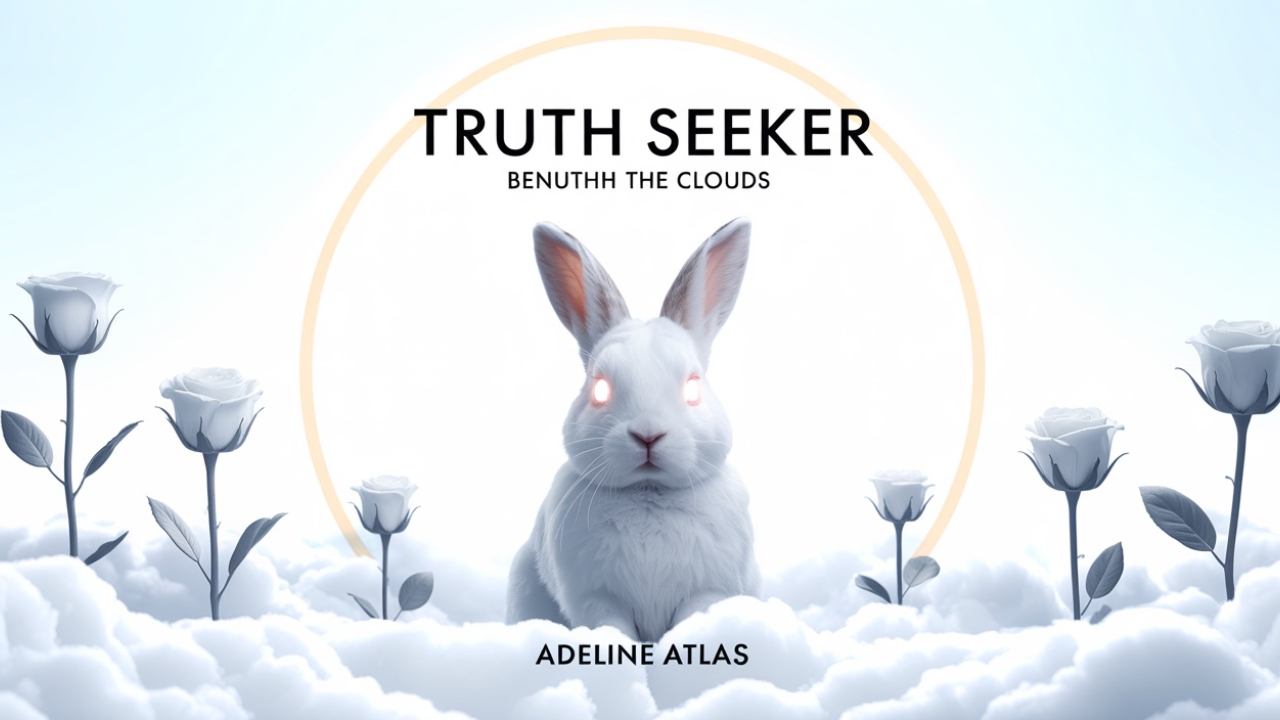
ORDER YOUR COPY
Why Do We Say “Go Down the Rabbit Hole” When Looking for Truth?
When people talk about discovering hidden truths, breaking out of mental conditioning, or waking up to the reality behind the narrative, they often say, “That’s when I went down the rabbit hole.” The phrase is everywhere in truth-seeking circles. It’s not just a trend or a throwaway expression. It’s a metaphor with a very specific meaning. It captures the experience of leaving behind the world of comfortable illusions and entering the realm of deeper, often uncomfortable, reality.
But what exactly does it mean to “go down the rabbit hole”? Where does this idea come from? Why does it resonate so strongly with truth seekers? And what does it tell us about how information, perception, and reality are structured in today’s world?
Let’s start with its origin. The phrase “down the rabbit hole” comes from Lewis Carroll’s 1865 novel Alice’s Adventures in Wonderland. In the opening chapter, Alice sees a white rabbit, follows it, and falls down a long tunnel into a surreal and illogical world where nothing works the way it’s supposed to. The laws of reality are upside down. Language becomes circular. Identity becomes unstable. Authority figures are absurd. And Alice, who thought she understood how the world works, is forced to question everything.
The story became a lasting symbol for what happens when someone steps outside of ordinary perception. In modern truth-seeking, going “down the rabbit hole” doesn’t mean entering a fantasy — it means exiting a socially constructed illusion. It describes the moment a person starts questioning the official version of reality and discovers that what they believed to be true was only a surface-level projection. And once that process begins, it doesn’t just change what you know. It changes how you know — and how you think.
People don’t use this phrase casually. They use it to describe an initiation. It often starts with something small — a contradiction in a news story, a strange pattern of censorship, a suspiciously timed law, or a moment of déjà vu where you sense that something isn’t what it seems. At first, you assume it’s just a one-off. Maybe someone made a mistake. Maybe you misunderstood. But something in you won’t let it go. You follow the thread. You search deeper. You look into the history. You check multiple sources. You listen to voices outside the mainstream. And slowly, you begin to see that the story is more complex than you were told.
What you thought was just a curious detail becomes a recurring theme. And before you know it, you're in a completely different worldview — one where the people, institutions, and systems you once trusted now appear to be operating according to motives and agendas you were never meant to notice. That’s what going down the rabbit hole really means. It’s not about adopting wild theories. It’s about discovering that reality has been curated — and that much of what we call knowledge has been filtered, sanitized, and simplified to maintain control.
One of the most important aspects of this metaphor is that once you fall down the rabbit hole, you can’t go back. You may want to. You may wish you could unsee what you saw, unknow what you learned, or believe again in the version of reality that made things feel simple and safe. But you can’t. Your perception has changed. The way you interpret information has changed. The questions you ask are different. And that’s not because you’ve been radicalized. It’s because you’ve been deconditioned.
Truth-seeking is not about becoming extreme. It’s about becoming accurate. The reason the rabbit hole feels so destabilizing is because the lies we are taught are not random — they are foundational. They are woven into every area of life: medicine, education, media, politics, entertainment, religion, economics, and science. Most people are not walking around with a few misunderstandings. They are living inside a carefully constructed illusion that was designed to limit critical thought, suppress dissent, and reward compliance.
That illusion feels normal — because it’s repeated. It’s taught early and reinforced constantly. It’s embedded in language, advertising, curriculum, and algorithms. But just because something is normal doesn’t mean it’s true. And just because everyone else believes it doesn’t mean it’s real.
When someone begins to see through the illusion, they often describe it as “falling.” That’s no coincidence. The rabbit hole is not a staircase. It’s not a door. It’s a drop. That drop is symbolic of what happens when your mental structure collapses. It’s the moment you realize that the world isn’t what you thought, and that your previous sense of stability was based on narratives, not on facts.
In the beginning, this feels disorienting. You may feel angry. Confused. Lonely. You may try to explain what you’ve found to friends or family, only to be met with ridicule, denial, or silence. That’s part of the process. When you go down the rabbit hole, you don’t just leave behind old beliefs. You often leave behind people who aren’t ready to question them. That isolation can feel like a punishment — but it’s not. It’s an indication that your frequency is changing. You’re tuning into a level of reality that many people have been conditioned to avoid.
There are stages to this process. At first, you notice one area of deception. Maybe it’s media. Maybe it’s food. Maybe it’s pharmaceutical marketing. But as you investigate further, you begin to see that the same patterns show up everywhere: the silencing of dissent, the manipulation of language, the repetition of emotion-triggering imagery, the timing of announcements, the financial incentives behind public statements. You realize these aren’t isolated glitches — they’re engineered systems.
This realization leads to the second stage: the collapse of the surface world. What you once thought was real now looks like a stage set. Headlines become scripts. Institutions become actors. Policies become rituals. And public opinion becomes a performance — not a reflection of critical thought, but the result of mass programming. You don’t become a cynic. You become a decoder. You start seeing structure where others see coincidence.
The third stage is when you develop pattern literacy. You begin to recognize not just facts, but formats. You know when a narrative is being “rolled out.” You notice coordinated talking points. You notice suppression campaigns. You see the same tricks used across different domains — whether it's health, war, race, or technology. You stop being reactive and start tracking. You develop a memory for what was said, when it was said, and what changed — even when the system hopes you’ll forget.
By the time you reach this point, the rabbit hole is no longer a tunnel you fell into. It’s a lens you live with. You no longer ask, “Is this true?” You ask, “How is this being constructed?” You question the narrative, the motive, the source, and the strategy — every time. You’re not paranoid. You’re practiced. And your mind no longer works like it used to — because now, it works on multiple layers.
The system tries to prevent this awakening by attaching shame to the process. That’s why people who speak out are called crazy, unstable, or conspiratorial. Not because their claims have been disproven, but because the label itself is meant to shut down inquiry. It’s not a logical argument. It’s a psychological tactic. If you can make someone feel embarrassed for thinking too much, they’ll stop thinking at all. That’s the goal.
But here’s the reality: the rabbit hole doesn’t turn you into a conspiracy theorist. It turns you into a critical thinker. The journey you’re on is not about believing every alternative explanation. It’s about refusing to outsource your discernment. It’s about learning how to weigh evidence, recognize patterns, follow incentives, and arrive at conclusions that make sense to you — not conclusions you were told to repeat.
Going down the rabbit hole doesn’t mean you’ll end up with all the answers. In fact, the deeper you go, the more you realize how complex the systems are — how many layers exist between what’s reported and what’s real. But that doesn’t mean you stop. It means you develop humility alongside discernment. You learn to hold ambiguity without giving up clarity. You learn to think in systems, not just soundbites.
The rabbit hole is not a place of confusion. It’s a place of depth. And in a world obsessed with speed, performance, and appearances, depth is rare. The truth seeker learns to slow down, to watch, to document, and to build an internal archive that can’t be erased by trending headlines or reactive outrage. The rabbit hole teaches you how to hold your own clarity even when no one around you sees what you see.
And that’s the final stage — freedom. At this point, you no longer need to be believed to know what you know. You don’t need to convince others. You don’t need to win arguments. Your thinking is no longer fueled by ego or the need for approval. It’s anchored in discernment. You trust your process. You trust your lens. And you keep going — not because you want to escape reality, but because you finally found it.
So the next time someone warns you not to “go down the rabbit hole,” remember what they’re really saying. They’re not warning you about danger. They’re warning you about depth. They’re telling you that if you think too deeply, you may no longer fit into the illusion. And they’re right. But that’s not a loss. That’s liberation.
Because the rabbit hole isn’t just a descent. It’s a departure — from the illusion everyone else lives in.